Monday, 6 June 2016

What Happened in the Peak Week of UK Electricity Consumption in 2016?


In the week of 18th January 2016, which was the week with the highest average electricity demand so far this year, we consumed an average of 38.7 GW . 
But the peak in the year was just over 52 GW, so if we could completely flatten our consumption, we would reduce the need for new power stations by 13 GW. 
Very little of peak demand is met by renewables - an inconvenient truth for low carbon pundits like me - wind and hydro only contributed 8% of the total in that week. Solar will have contributed much less as it is dark at peak times in mid-winter.
Nearly half the demand in the week is still being met by gas. It is agreeable to see that subsequent to the peak weeks, coal fired production fell dramatically - coal fired stations are being decommissioned.
But how will we meet next year's peak? 
It will be much easier to do so without resorting to coal on a big scale if we manage our domestic demand better - that means you, me, and all our neighbours!
Keep spreading the word!

Who is the main culprit in creating high peak demand in winter?


This slide, from a UK DECC report, clearly shows that domestic consumption is both the major consumer of electricity in winter, and the most peaky seasonally.
Much work has already been done on smoothing industrial electricity consumption, because it is relatively easy for centralised organizations to bring it about.
If you like decentralization, people power, and a low carbon future, then reducing domestic peak consumption in winter is a must!
Let me know what you are doing about it. Please.

Friday, 3 June 2016

Who pays for the absence of energy efficiency?


Here's an example on a small scale of what can be achieved by a combination of efficiency and time shifting of electricity demand, courtesy of a yes you've guessed American company, CP Power

They have almost halved the peak consumption of an industrial user in this example.

Were we to halve our peak consumption in UK, we would save around 25 GW and £200 billion in new capacity and distribution costs at Hinkley C prices.

Each GW we save from the peak is worth £8 billion. How long before we save the first one?!

For how long each year is UK electricity demand at or near its peak?


Thanks to the National Grid's Gridwatch site, it is possible for anyone to download and analyse electricity consumption over any of the last 7 years.
I did it for the winter of 2015/16.
I discovered:
The peak demand last winter was 52.17GW
The demand was over 50 Gw for only 7.5 hours
The demand was over 48 GW for only 50 hours
The demand was over 45 GW for only 186 hours
We could make a good start by saving ourselves £16 billion in capacity costs by reducing consumption slightly for the seven and a half hours that demand is over 50 GW.
I will shortly be showing you an easy way to do this!
You won't have to watch the gridwatch site the whole time - a computer will do it for you!

Tuesday, 31 May 2016

Is it safe to delay appliances into the middle of the night?


There has been some discussion recently about the risks involved in running appliances at night unattended.
You can read a  a Which webpage about it.
In the article there is no mention of the value to the wider community of avoiding the peak, irrespective of whether the delay is into the middle of the night or not.
The picture above, which is taken from the webpage, suggests an overloaded dryer, which is obviously a bad and dangerous idea.
I suggest

  • Don't overload appliances
  • Have your appliances checked every year (it's compulsory in certain types of property)
  • Don't use it as an excuse not to delay at all!
  • It's more important to avoid the peak (3 to 8 pm) than to delay into the middle of the night.


Tuesday, 24 May 2016

Am I managing my electricity consumption well?


This is a chart of my domestic  electricity consumption for a fairly typical mid-winter weekday , Tuesday 9th February 2016.
Technically the chart is net consumption after PV generation, but in mid February my 4kW system will generate negligible energy.

My observations are:


  • I have 6kW of storage heaters which come on at midnight.  I am pleased to see that they only remained on initially for less than an hour. They appear to come on again sporadically through the night when they are on a low setting.
  • I seem to use some electricity at 8-10am for breakfast and probably cups of tea.
  • My consumption is then low until 7-8pm when cooking the evening meal starts
  • At 8pm the time switch on my immersion heater comes on
  • Later in the evening I have a bath and the immersion heater comes on again.
  • I wonder if the clock in the Owl monitor was accurately set - perhaps the consumption around 11-12pm is in fact the storage heaters coming on again. it would also make sense for the breakfast blip to be a bit earlier.
Anyway the main thing that please me is that consumption at the peak time around 3-7pm has been kept low. it would be even better if I could extend this until 8pm, but nobody is perfect. 

Not every day was as "good" as this, but at least I have some idea of what is happening.
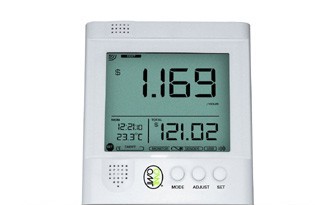
The device I use is an Owl USB monitor which costs about £40.

Any comments?
Do you monitor your personal domestic consumption?

Tuesday, 17 May 2016

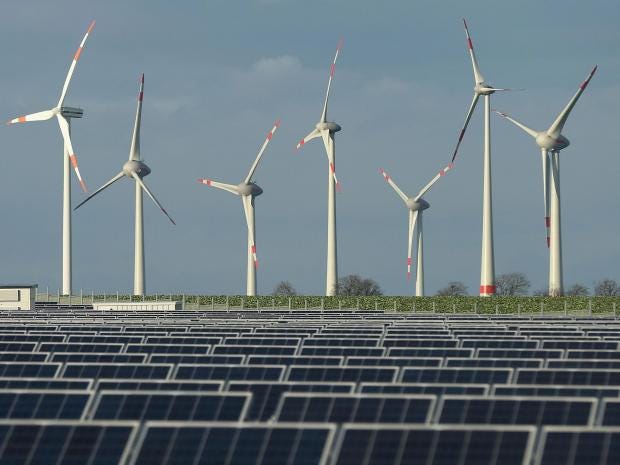
People in Germany are now being paid to consume electricity The price of power in Germany briefly dropped to minus 130 euros per MWh on 8 May

renewable.jpg

As reported in the Independent, electricity prices went negative in Germany for the first time on 8th May.
Why?

  • They generate a lot of both wind and solar power
  • Demand for electricity has not been managed to match intermittent renewable supply
  • They would rather keep renewables running than switch them off, even if it is more expensive to do so.
What are the lessons for UK?
  • Manage demand to more closely match the cost of intermittent supply
  • Raise awareness of this issue with domestic consumers who have the power to manage their demand patterns far more than they currently do
The prize for doing this is huge - of the order of £50 billion if the alternative is Hinkley C type power stations.